The good news of Jesus is the best news in history.
We are broken. We have sinned. We cannot rescue ourselves. But God loves us so much that He sent His Son, Jesus, to show us His love, die for our sin, and rise again in victory. When we say yes to Jesus, He makes us new and fills us with His Spirit.
That is the gospel.
And it is too good to keep to ourselves.
THE GOSPEL IS MEANT TO BE SHARED
Romans 10 gives us both the message and the mission: if we openly declare that Jesus is Lord and believe in our hearts that God raised Him from the dead, we will be saved. And then Paul asks the question that should move us: How can people believe if they have never heard? How can they hear unless someone tells them?
Romans 10:9–15 is clear. People need the good news. And God sends people to bring it.
That is us.
Every follower of Jesus is already an evangelist in some way. We talk about what we love. Sports teams. Restaurants. Podcasts. Products. Politics. We share what has captured our attention because it matters to us.
So the question is not, “Am I an evangelist?” The question is, “What am I evangelizing?”
If Jesus has changed us, His love should come up in our real lives too. Not as pressure. Not as performance. As an honest overflow of what He has done.
WHAT EVANGELISM IS NOT
Sharing faith can feel intimidating because many of us carry the wrong picture of evangelism. We think we need to be loud, polished, persuasive, or able to answer every hard question.
We do not.
- Evangelism is not a personality type. Introverts are not excused from loving people and sharing hope. This is not about being the loudest person in the room.
- Evangelism is not a sales pitch. We are not trying to sell Jesus. We are satisfied customers of His grace. We live it, and we share it.
- Evangelism is not an argument. Winning a debate is not the same as loving a person. Truth matters, but anger and arrogance do not make Jesus look compelling.
- Evangelism is not only being nice. Kindness matters. Serving matters. But eventually, the good news needs words.
- Evangelism is not having every answer. “I don’t know” can be an honest and faithful response. We can learn, search Scripture, and discover together.
You do not need a seminary degree. You do not need a perfect script. You need to know Jesus, love people, and be willing to speak.
THREE MARKS OF EVERYDAY EVANGELISM
1. LIVE COMPASSIONATELY CURIOUS
The first step is not talking. It is listening.
Be the most compassionately curious person in the room. At work. At school. In your neighborhood. At the gym. Around the dinner table. Ask good questions because you actually want to know people.
Tell me your story.
What has life been like for you?
What do you love?
What is hard right now?
What do you hope for?
Interested people are interesting people. When we slow down enough to listen, people feel known. And when people feel known, trust grows.
This is not a strategy for turning people into projects. It is love. Real love pays attention. It does not dominate every conversation. It asks. It reflects. It listens.
People are not problems to solve. They are image-bearers to know.
2. KNOW THE GOSPEL
We do not need to make the gospel complicated. Paul calls it the message of first importance: Christ died for our sins, was buried, and was raised from the dead on the third day.
Keep it simple:
- God made us and loves us.
- We have all sinned and broken relationship with Him.
- Jesus came, lived without sin, died for our sin, and rose again.
- We can repent, believe, and receive new life through Him.
Christmas, Good Friday, Easter, and Pentecost provide another simple way to remember the whole story. Jesus came to us. He died for us. He rose again. Then He sent His Spirit to live in us with hope, power, love, and meaning.
The point is not to use perfect language. The point is to make Jesus clear.
THE THREE CIRCLES: A SIMPLE WAY TO START
One practical framework begins with what everyone already knows: life is broken.
Look around. Our world is a mess. Our relationships are a mess. Even when life looks put together from the outside, most of us know something is not right inside.
The gospel explains why. God made us in His image and created us for relationship with Him. But we chose our own way. Scripture calls that sin. Sin fractures our relationship with God, others, and ourselves.
But brokenness is not where the story ends.
God did not walk away. He pursued us. He sent Jesus to show us what God is like and to make a way back through His death and resurrection. When we turn from our way and trust Jesus, He makes us new.
That is the invitation: Do you want to know this Jesus?
3. KNOW YOUR STORY
People need to hear the gospel. And they also need to hear what the gospel has done in you.
There is no bad testimony. You do not need a dramatic story to have a real story. Maybe Jesus met you in addiction. Maybe He met you in anxiety, striving, anger, loneliness, or pride. Maybe you gave your life to Him as a child and have spent years learning to trust Him.
Every story of grace matters.
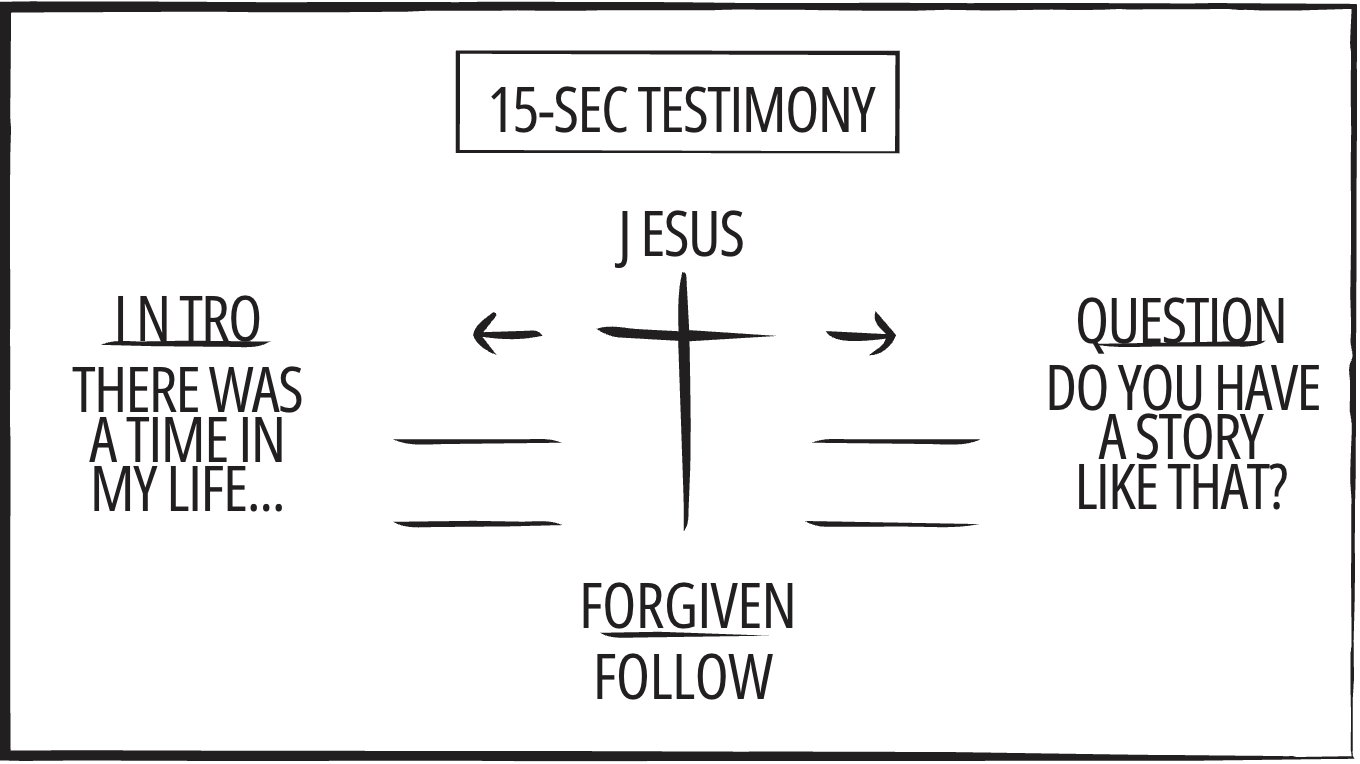
A simple testimony has three parts:
- What was life like before you fully trusted Jesus?
- How did Jesus meet you?
- How is He changing your life now?
Be honest. You do not need to pretend you have arrived. People do not need a polished version of you. They need to know that Jesus meets real people in real life.
LOVE FIRST. DO NOT LEAD WITH RULES.
One college student shared a powerful posture for conversations with friends: love them first. Do not make them a project. Do not make friendship conditional on their response.
That changes everything.
Instead of starting with behavior, start with the deeper question. Instead of telling someone what they should stop doing, ask whether the life they are living is actually giving them life.
Does this leave you full or empty?
Is this working for you?
Tell me more about that.
Rules are secondary. Jesus is primary.
There is a time to talk about the way we live. But people need to encounter the love of Jesus before they can understand the life He calls them into. We do not shame people into transformation. We point them toward the One who makes all things new.
START WITH THE RESURRECTION
Hard questions will come. Questions about the church, politics, suffering, sexuality, hypocrisy, and more. Do not be afraid of them. But do not get trapped there either.
Bring the conversation back to the center: Did Jesus rise from the dead?
Because if He did not rise, Christianity is empty. But if He did rise, everything changes.
Read one of the Gospels together. Look at Jesus. Look at the resurrection. Make space for an honest conversation about who He is and what He has done.
You do not have to force a result. You are called to be faithful, not flawless.
GET IN THE GAME
Fear does not disappear before we begin. Growth happens when we step out, learn, fail, listen, pray, and try again.
Sharing Jesus can deepen our own faith because it reminds us what we have received. We cannot give away what we are not experiencing ourselves. So stay close to Jesus. Let His Word shape you. Let His Spirit fill you. Let His people encourage you.
Then look around.
Who is already in your life?
Who needs to be known?
Who needs hope?
Who needs to hear that Jesus loves them more than they can imagine?
We were made for more than quiet faith. We were made to love people. To tell the truth with grace. To carry good news into everyday conversations.
Jesus is alive. Hope is real. And someone needs to hear it from you.